Wedding Timeline Planning Guide

Planning your wedding timeline doesn't have to be overwhelming. This guide walks through each part of the day so you can decide what moments matter most and determine how many hours of photography coverage you'll need.

Our recommendation: Build your timeline starting when the bride is 99% finished with hair and makeup. This allows your photographer to capture the excitement without spending hours photographing curling irons and makeup brushes.

Step 1: Decide Your Coverage Length

How Many Hours of Photography Coverage Do You Need?

Coverage Best For
6 Hours Ceremony, family portraits, couple portraits, and reception highlights. Ideal for smaller weddings or celebrations with a shorter schedule.
8 Hours The most popular option. Includes getting ready, ceremony, portraits, and the major reception events like entrances, dances, speeches, and cake cutting.
10 Hours Perfect for larger weddings, multiple venues, longer travel times, or cultural traditions that require additional photography coverage.
12 Hours Complete wedding day coverage from getting ready through the end of the reception. Ideal for tea ceremonies, multiple events, outfit changes, and late-night celebrations.

Section 1: Getting Ready

Typical Time Needed: 45–60 minutes

Starting Point: Bride is 99% Finished with Makeup

Instead of photographing several hours of makeup, begin when everyone is nearly ready.

This gives enough time for:

Detail Photos

  • Dress

  • Shoes

  • Rings

  • Jewelry

  • Invitation suite

  • Bouquet

  • Perfume

  • Veil

Final Getting Ready Moments

  • Putting on the dress

  • Buttoning or zipping the dress

  • Putting on jewelry

  • Shoes

  • Veil placement

  • Bridesmaids helping

  • Groom putting on jacket

  • Groom adjusting tie

  • Groom putting on cufflinks

Family Moments

  • First look with Dad

  • First look with Mom

  • Bridesmaids reveal

  • Groom with parents

  • Gifts or letters

Section 2: First Look (Optional)

One of the biggest decisions is whether to do a First Look before the ceremony.

If You Do a First Look

Typical Time: 60–90 minutes

Advantages:

✓ Couple portraits before ceremony

✓ Wedding party photos before ceremony

✓ Family photos before ceremony (when possible)

✓ More relaxed timeline

Photos Included

  • Couple first look

  • Couple portraits

  • Wedding party

  • Immediate family portraits

  • Individual portraits

If You Skip the First Look

Many couples prefer seeing each other for the first time during the ceremony.

This creates a more traditional experience, but it also means:

  • Couple portraits happen after ceremony

  • Wedding party photos happen after ceremony

  • Family portraits happen after ceremony

  • Cocktail hour becomes busy

This can reduce portrait time if your reception starts shortly after.

Section 3: Ceremony

Typical Length: 20–60 minutes

Your ceremony length depends on your traditions.

Common ceremony moments include:

  • Guests arriving

  • Groom waiting

  • Wedding party processional

  • Bride walking down aisle

  • Giving away the bride

  • Ceremony wide shots

  • Exchange of vows

  • Ring exchange

  • First kiss

  • Recessional

  • Congratulations from guests

(Some cultural or religious ceremonies may be significantly longer.)

Section 4: Family Portraits

Typical Time: 20–40 minutes

Family portraits go fastest when a list has been prepared beforehand.

Common combinations include:

  • Couple with both families

  • Couple with bride's immediate family

  • Couple with groom's immediate family

  • Parents only

  • Grandparents

  • Siblings

  • Extended family (optional)

Section 5: Wedding Party Portraits

Typical Time: 20–30 minutes

Photos may include:

  • Entire wedding party

  • Bridesmaids

  • Groomsmen

  • Bride with bridesmaids

  • Groom with groomsmen

  • Fun candid photos

  • Individual portraits

Section 6: Couple Portraits

Typical Time: 30–45 minutes

This is often where the most iconic wedding photographs are created.

Depending on available time, photographers may visit multiple locations around the venue.

Photos often include:

  • Romantic portraits

  • Walking together

  • Candid moments

  • Wide scenic images

  • Close-up portraits

  • Sunset photos (if timing allows)

Section 7: Reception

Most couples don't need every minute of the reception photographed. Focus on the major events that tell the story of the celebration.

Common reception moments include:

Reception Details

  • Reception room

  • Centerpieces

  • Cake

  • Guest tables

  • Decor

Grand Entrance

  • Wedding party entrance

  • Couple entrance

Formal Events

  • Welcome speech

  • Blessing

  • First dance

  • Parent dances

  • Toasts

  • Cake cutting

Dinner

Photography typically pauses during guest dining unless speeches occur.

Outfit Change

If you are planning an outfit change, make sure to have a plan for the outfit change allot 20mins in case of wardrobe malfunction.
Usually this will be done after speeches and dances but before cake-cutting/bouquet toss/dancing

Open Dancing

Highlights include:

  • Dance floor

  • Guest interactions

  • Group dancing

  • Fun candid moments

Special Traditions

Depending on your wedding:

  • Bouquet toss

  • Garter toss

  • Anniversary dance

  • Cultural performances

  • Surprise entertainment

Grand Exit (Optional)

Examples:

  • Sparkler exit

  • Bubble exit

  • Confetti

  • Vintage getaway car

  • Private last dance

Sample Wedding Timeline (8 Hours with a First Look)
Time Event
2:00 PM Photography begins when the bride is approximately 99% finished with hair and makeup.
2:00 – 2:45 PM Wedding details, dress, rings, invitation suite, final getting ready photos, and candid moments.
2:45 – 3:00 PM First Look with Dad (or parents).
3:00 – 4:15 PM Couple First Look, couple portraits, wedding party portraits, and immediate family photos.
4:15 – 4:45 PM Finish remaining family portraits.
5:00 PM Ceremony begins.
5:30 PM Cocktail hour while guests mingle.
6:00 PM Grand Entrance into the reception.
6:15 PM First Dance and Toasts.
7:00 PM Dinner service.
7:30 PM Cake Cutting.
7:45 PM Golden Hour / Sunset portraits.
8:00 – 10:00 PM Open dancing, reception candids, and celebration coverage.
Sample Wedding Timeline (8 Hours Without a First Look)
Time Event
2:30 PM Photography begins when the bride is approximately 99% finished with hair and makeup.
2:30 – 3:30 PM Wedding details, getting ready photos, and candid moments.
3:30 PM First Look with Dad (or parents).
4:30 PM Guests begin arriving.
5:00 PM Ceremony begins.
5:30 PM Family portraits immediately following the ceremony.
6:00 PM Wedding party portraits.
6:30 PM Couple portraits.
7:00 PM Grand Entrance.
7:15 PM First Dance.
7:30 PM Dinner and Toasts.
8:15 PM Cake Cutting.
8:30 – 10:30 PM Dancing, reception candids, and celebration coverage.

Quick Planning Checklist

Before the Wedding

  • ☐ Decide on photography coverage length

  • ☐ Choose whether to do a First Look

  • ☐ Create a family photo list

  • ☐ Confirm ceremony length

  • ☐ Plan reception events

  • ☐ Discuss sunset portrait timing

  • ☐ Decide if you want a grand exit

Key Moments to Include

  • ☐ Detail photos

  • ☐ Bride getting dressed

  • ☐ Groom getting ready

  • ☐ First look (optional)

  • ☐ First look with Dad

  • ☐ First look with Mom

  • ☐ Wedding party portraits

  • ☐ Family portraits

  • ☐ Ceremony

  • ☐ Couple portraits

  • ☐ Grand entrance

  • ☐ First dance

  • ☐ Parent dances

  • ☐ Toasts

  • ☐ Cake cutting

  • ☐ Dancing

  • ☐ Grand exit (optional)

Final Tip

The best wedding timelines leave room to breathe. Building in small buffers between major events allows everyone to stay relaxed, keeps the day running smoothly, and gives your photographer the flexibility to capture genuine, unscripted moments instead of rushing from one event to the next. Remember, your timeline should support your experience—not the other way around.
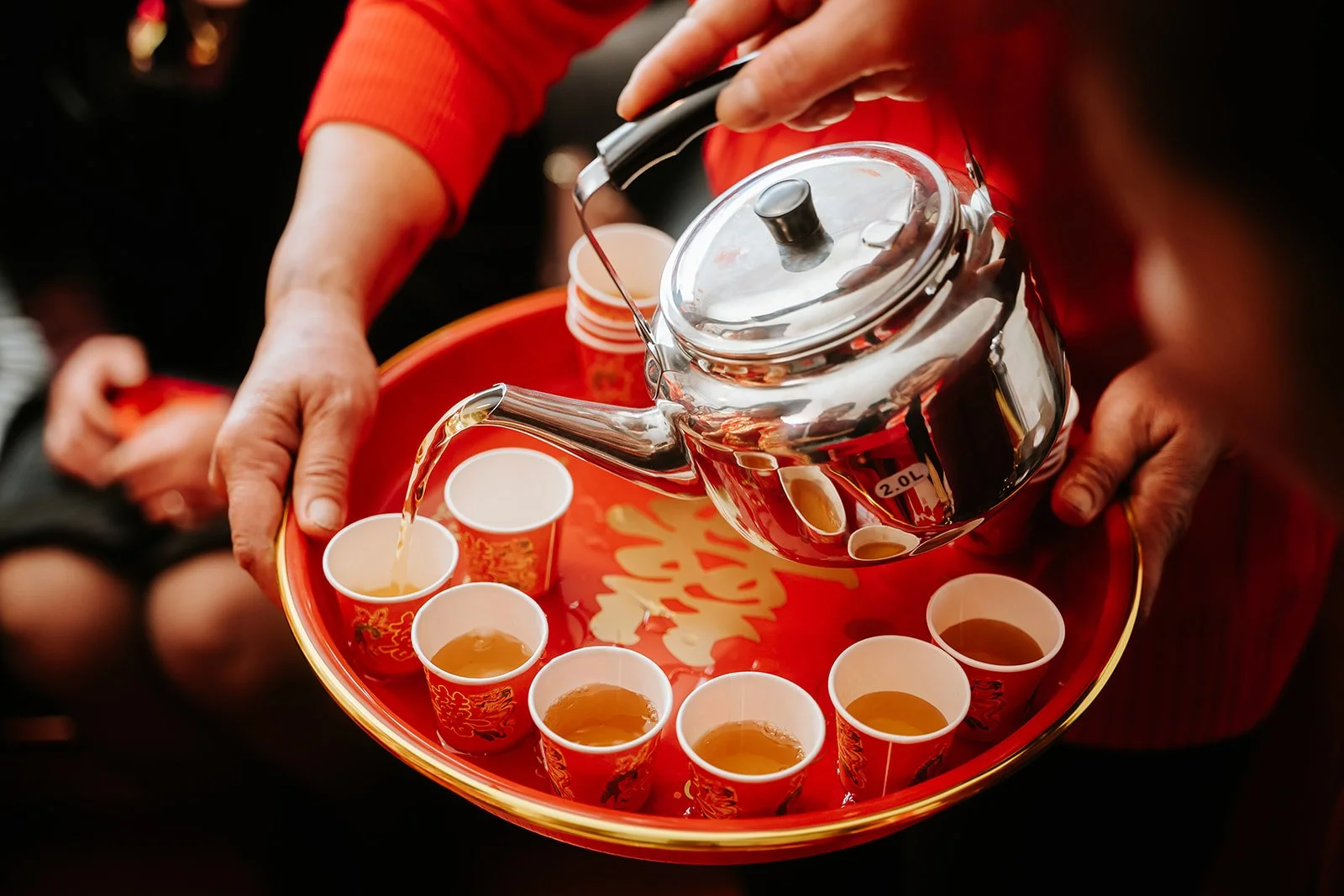
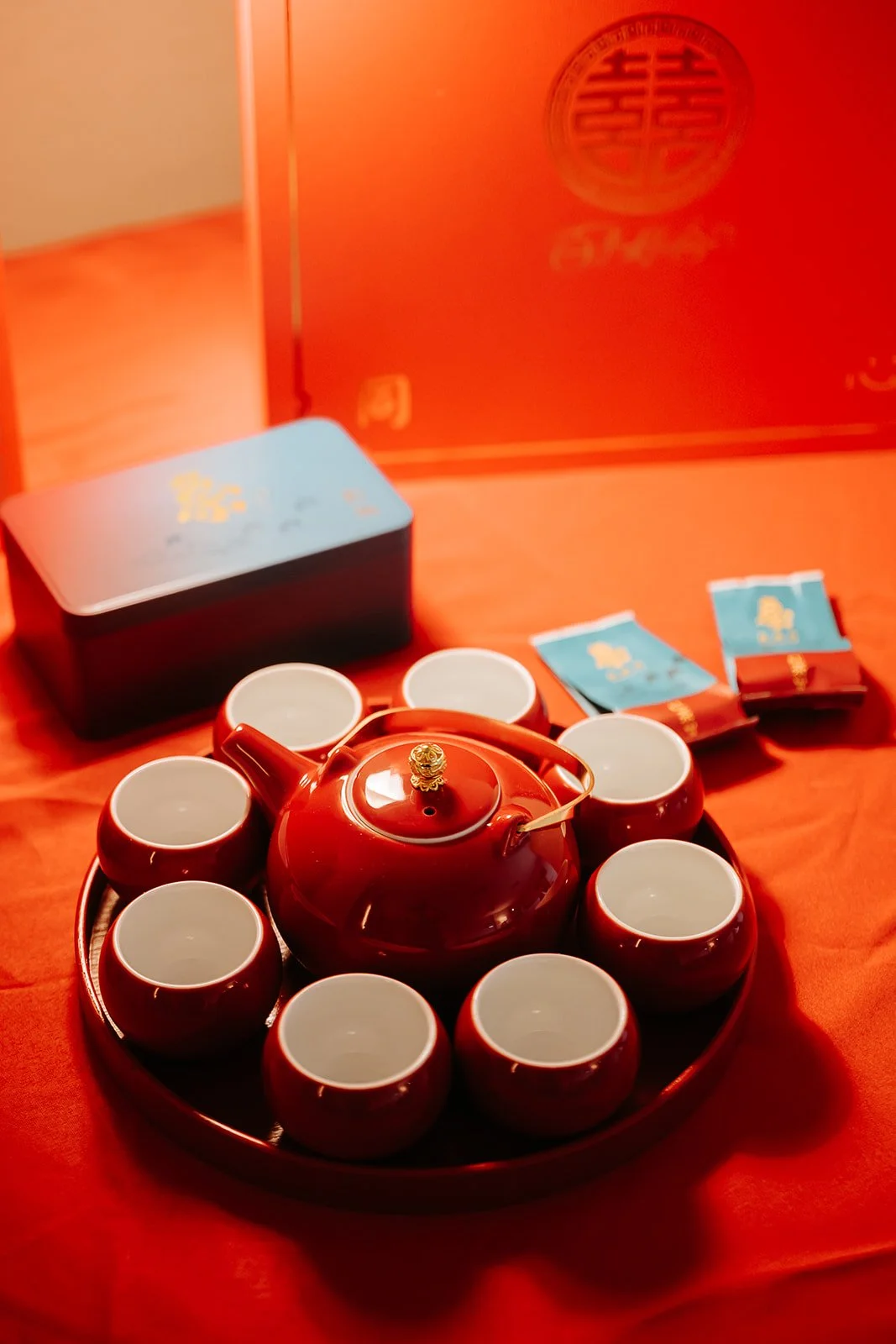
Planning an asian tea ceremony: honoring tradition while making it your own

An Asian tea ceremony is one of the most meaningful moments of a wedding day. While every culture has its own customs, attire, and traditions, the heart of every tea ceremony remains the same: showing respect and gratitude to your family through the simple act of serving tea.

For many couples, especially those blending cultures or planning a modern wedding, it's easy to feel overwhelmed by conflicting advice online. The truth is that there is no single "correct" way to hold an Asian tea ceremony. Whether your family is Chinese, Vietnamese, Korean, or from another Asian heritage, each family may have traditions that differ from another's.

The most important thing is creating a ceremony that honors your loved ones.

What Is an Asian Tea Ceremony?

At its core, a tea ceremony is a symbolic gesture of respect.

The couple prepares and serves tea to parents, grandparents, and other honored elders. In return, family members often offer blessings, advice for marriage, and sometimes gifts such as jewelry or red envelopes.

While the ceremony is deeply rooted in tradition, it is also incredibly personal. The order of family members, the wording used, the gifts exchanged, and even the location can vary significantly depending on your family's customs.

Every Culture Has Its Own Traditions

Many people refer to "the Asian tea ceremony" as though it's one event, but there are many variations across Asia.

Some examples include:

  • Chinese tea ceremonies often emphasize honoring both families and may include serving tea in order of seniority.

  • Vietnamese tea ceremonies may be combined with traditional engagement customs and often involve both families formally meeting.

  • Korean weddings include traditions that differ significantly from Chinese and Vietnamese ceremonies, with their own symbolic rituals.

  • Families from different regions, religions, or generations may have customs unique to their own household.

There is no universal checklist that applies to every family.

Instead of worrying about following every tradition perfectly, start by talking with your parents or grandparents about what is meaningful to them.

The Goal Is Respect, Not Perfection

One of the biggest misconceptions is that every step must be performed exactly according to tradition.

In reality, most families understand that modern weddings often require flexibility.

The Goal Is Respect, Not Perfection

Whether your ceremony lasts 20 minutes or over an hour, whether you serve ten relatives or forty, the sincerity behind the gesture matters far more than strict adherence to any particular format.

The purpose of the tea ceremony isn't to perform a flawless cultural presentation—it's to express appreciation to the people who helped raise you..

Planning Your Tea Ceremony

Decide Who Will Receive Tea

Start by creating a list of family members you would like to honor.

Typically this includes:

  • Parents

  • Grandparents

  • Older siblings (depending on family tradition)

  • Aunts and uncles (if customary)

  • Other respected elders

Some families serve only immediate family, while others include extended relatives.

Ask About Family Traditions

Every family is different.

Ask questions such as:

  • Is there a preferred serving order?

  • Are both families participating?

  • Should gifts or jewelry be exchanged?

  • Will introductions be made?

  • Is there special wording that should be used?

Having these conversations early helps avoid confusion on the wedding day.

Choose the Right Location

Tea ceremonies can take place almost anywhere:

  • At home

  • In a hotel suite

  • At the ceremony venue

  • At the reception venue

  • In a family member's home

Choose a location that provides enough seating for family members while allowing guests and photographers room to move comfortably.

Natural light is always a bonus if photography is important to you.

Allow Enough Time

Tea ceremonies often take longer than couples expect.

Depending on the number of family members participating, ceremonies commonly take anywhere from 30 to 90 minutes.

Be sure to include extra time for:

  • Family arriving

  • Organizing seating

  • Group photographs

  • Gift exchanges

  • Conversations and blessings

A relaxed timeline helps everyone enjoy the experience without feeling rushed.

Don't Forget the Family Photos

The tea ceremony naturally brings together relatives who may not see each other often.

It's one of the best opportunities to capture meaningful family portraits.

Consider photographing:

  • Each family receiving tea

  • Parents with the couple

  • Grandparents

  • Siblings

  • Extended family groups

  • Multi-generational portraits

  • Candid moments between relatives

These photographs often become some of the most treasured images from the entire wedding day.

Communicate With Your Photographer

Every tea ceremony unfolds a little differently.

Before the wedding, let your photographer know:

  • Which cultural traditions your family follows

  • The order of the ceremony

  • Any important family dynamics

  • Special heirlooms or gifts being exchanged

  • Must-have family photo combinations

An experienced wedding photographer can anticipate emotional moments while ensuring nothing important is missed.

Making the Ceremony Your Own

Many modern couples blend traditions together.

You might combine Chinese and Vietnamese customs, include both English and another language, or adapt the ceremony to reflect your family's unique history.

Remember, traditions have always evolved over time.

The most meaningful tea ceremonies are often the ones that feel authentic to the couple and their families.

A Moment You'll Remember Forever

Wedding days move quickly, but tea ceremonies naturally encourage everyone to slow down.

They create space to thank the people who have supported you throughout your life and acknowledge the beginning of a new chapter together.

Whether your ceremony follows generations of family tradition or reflects a blend of cultures, the message remains the same: respect, gratitude, and the coming together of two families.

At Toucan Weddings, we've photographed tea ceremonies across many different Asian cultures and know that no two celebrations are ever alike. We work closely with couples to understand their family's traditions, build enough time into the wedding day, and capture both the meaningful rituals and the candid moments that make each ceremony unique.

Wedding Planning Checklist

Here is a comprehensive list to help you plan your wedding day

□ Establish Your Vision

Purpose: Create a shared vision for the wedding.

□ Discuss the overall style (formal, casual, luxury, rustic, destination, etc.)

□ Identify your top three priorities (food, photography, entertainment, guest experience, etc.)

□ Decide what elements are most important and where you're willing to compromise.

□ Create inspiration boards or save reference photos.

□ Set Your Budget

Purpose: Determine what you're comfortable spending.

□ Establish a total wedding budget.

□ Decide who is contributing financially.

□ Allocate estimated amounts for each category (venue, catering, photography, attire, décor, etc.).

□ Build a contingency fund for unexpected expenses.

□ Determine Your Guest Count

Purpose: Estimate attendance before choosing a venue.

□ Create a preliminary guest list.

□ Separate must-invite guests from optional guests.

□ Estimate attendance based on travel and family size.

□ Decide whether children are invited.

□ Choose a Wedding Date

Purpose: Select a timeframe that works for your priorities.

□ Choose preferred season. (summer - fun but hot weather & busy season for vendors, fall/winter - cooler and closer to holidays for guests, spring - seasonal florals but possible rain.)

□ Consider weather.

□ Check holidays and major local events.

□ Consider vendor availability.

□ Decide whether flexibility is more important than a specific date.

□ Select a Venue

Purpose: Find a venue that fits your vision and guest count.

□ Indoor or outdoor?

□ Ceremony and reception at one location?

□ Accessibility for guests.

□ Parking and transportation.

□ Backup weather plan.

□ Venue restrictions (vendors, alcohol, decorations, music, curfew).

□ Decide on Your Bridal Party

Purpose: Determine who will stand beside you.

□ Decide if you want a bridal party.

□ Determine bridal party size. (2-6 is manageable, but 6-10 is a party and requires more effort)

□ Choose Maid/Matron of Honor and Best Man.

□ Consider flower girls or ring bearers.

□ Decide on responsibilities and expectations.

□ Define Your Ceremony

Purpose: Plan the structure of the ceremony.

□ Religious or secular?

□ Officiant selection.

□ Ceremony length (average ceremony is 15-20mins, unless catholic ceremony which is a full church service + ceremony)

□ Personal vows or traditional vows (can do vows privately during first look or in front of guests).

□ Unity ceremony or cultural traditions.

□ Processional and recessional order.

□ Plan the Reception Experience

Purpose: Decide how you want guests to celebrate.

□ Cocktail hour.

□ Seated dinner or buffet.

□ Assigned seating or open seating.

□ Dancing or alternative entertainment.

□ Speeches and toasts.

□ Special traditions (cake cutting, bouquet toss, anniversary dance, etc.).

□ Choose Your Vendor Team

Purpose: Assemble professionals who align with your vision.

□ Wedding planner or coordinator.

□ Photographer.

□ Videographer.

□ Caterer.

□ Florist.

□ DJ or live band.

□ Hair and makeup.

□ Cake or dessert vendor.

□ Rentals.

□ Transportation.

□ Plan Your Wedding Style

Purpose: Create a cohesive aesthetic.

□ Color palette.

□ Floral style.

□ Table design.

□ Lighting.

□ Signage.

□ Stationery.

□ Dress code for guests.

□ Choose Wedding Attire

Purpose: Coordinate everyone's look.

□ Wedding dress.

□ Suit or tuxedo.

□ Shoes.

□ Accessories.

□ Bridesmaid attire.

□ Groomsmen attire.

□ Parent attire guidelines.

□ Consider Guest Experience

Purpose: Make the day enjoyable and comfortable.

□ Hotel room blocks.

□ Transportation.

□ Welcome bags.

□ Accessibility needs.

□ Dietary accommodations.

□ Childcare options (if applicable).

□ Weather comfort (fans, heaters, umbrellas, water stations).

□ Plan Photography Priorities

Purpose: Ensure meaningful moments are captured.

□ Decide whether to have a first look.

□ Identify must-have family photos.

□ List meaningful details to photograph.

□ Choose portrait locations.

□ Plan time for sunset portraits.

□ Discuss documentary vs. posed photography style.

□ Organize Wedding Day Logistics

Purpose: Create a smooth flow for the day.

□ Build a timeline.

□ Determine getting-ready locations.

□ Assign point people for questions.

□ Plan vendor arrival times.

□ Confirm transportation schedule.

□ Prepare an emergency kit.

□ Plan Post-Wedding Details

Purpose: Wrap up the celebration smoothly.

□ Gift collection.

□ Vendor gratuities.

□ Personal item pickup.

□ Dress preservation.

□ Thank-you cards.

□ Photo and video delivery expectations.

Final Planning Questions

Before the wedding, make sure you've answered these key questions:

□ Does the wedding reflect your personalities?

□ Is the budget realistic?

□ Have all major vendors been confirmed?

□ Does everyone know where they need to be?

□ Have family photo combinations been finalized?

□ Is there a backup plan for weather or unexpected changes?

□ Have you intentionally scheduled time to enjoy the day together?

This checklist is designed to guide couples through the major planning decisions without overwhelming them with tiny tasks. It can serve as the foundation for a more detailed planning timeline later in the process.