
An Asian tea ceremony is one of the most meaningful moments of a wedding day. While every culture has its own customs, attire, and traditions, the heart of every tea ceremony remains the same: showing respect and gratitude to your family through the simple act of serving tea.
For many couples, especially those blending cultures or planning a modern wedding, it's easy to feel overwhelmed by conflicting advice online. The truth is that there is no single "correct" way to hold an Asian tea ceremony. Whether your family is Chinese, Vietnamese, Korean, or from another Asian heritage, each family may have traditions that differ from another's.
The most important thing is creating a ceremony that honors your loved ones.
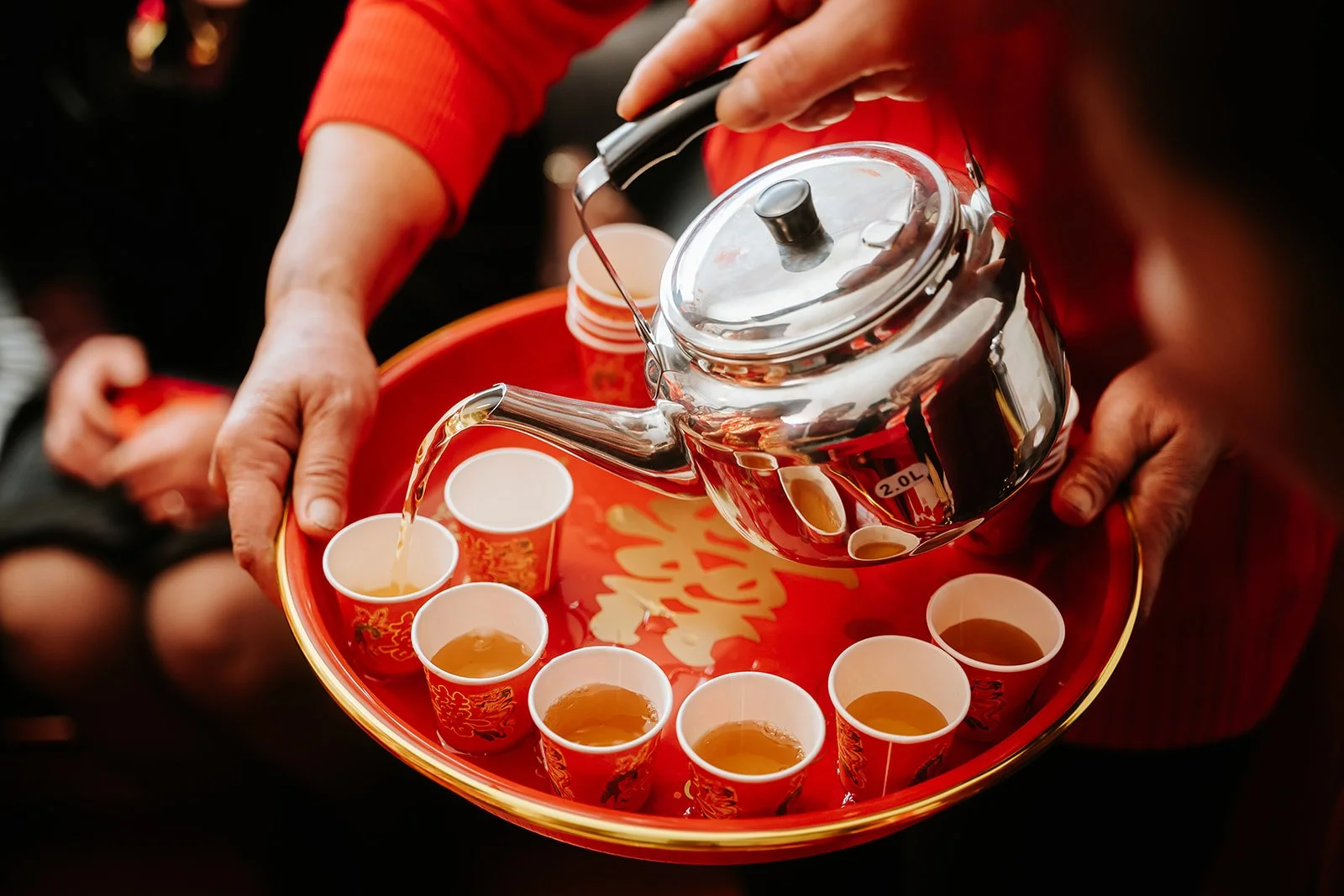
What Is an Asian Tea Ceremony?
At its core, a tea ceremony is a symbolic gesture of respect.
The couple prepares and serves tea to parents, grandparents, and other honored elders. In return, family members often offer blessings, advice for marriage, and sometimes gifts such as jewelry or red envelopes.
While the ceremony is deeply rooted in tradition, it is also incredibly personal. The order of family members, the wording used, the gifts exchanged, and even the location can vary significantly depending on your family's customs.
Every Culture Has Its Own Traditions
Many people refer to "the Asian tea ceremony" as though it's one event, but there are many variations across Asia.
Some examples include:
Chinese tea ceremonies often emphasize honoring both families and may include serving tea in order of seniority.
Vietnamese tea ceremonies may be combined with traditional engagement customs and often involve both families formally meeting.
Korean weddings include traditions that differ significantly from Chinese and Vietnamese ceremonies, with their own symbolic rituals.
Families from different regions, religions, or generations may have customs unique to their own household.
There is no universal checklist that applies to every family.
Instead of worrying about following every tradition perfectly, start by talking with your parents or grandparents about what is meaningful to them.
The Goal Is Respect, Not Perfection
One of the biggest misconceptions is that every step must be performed exactly according to tradition.
In reality, most families understand that modern weddings often require flexibility.
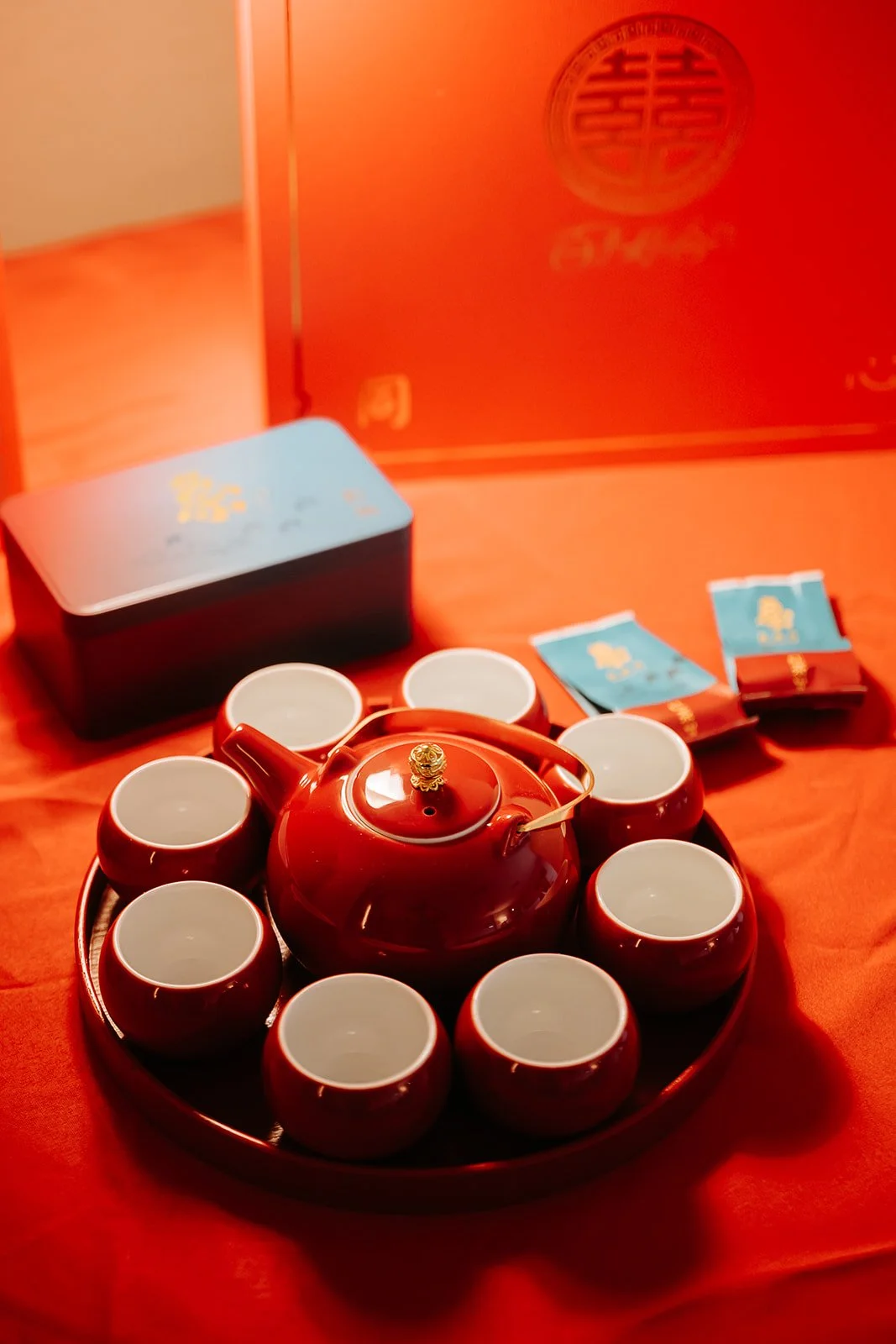
The Goal Is Respect, Not Perfection
Whether your ceremony lasts 20 minutes or over an hour, whether you serve ten relatives or forty, the sincerity behind the gesture matters far more than strict adherence to any particular format.
The purpose of the tea ceremony isn't to perform a flawless cultural presentation—it's to express appreciation to the people who helped raise you..
Planning Your Tea Ceremony
Decide Who Will Receive Tea
Start by creating a list of family members you would like to honor.
Typically this includes:
Parents
Grandparents
Older siblings (depending on family tradition)
Aunts and uncles (if customary)
Other respected elders
Some families serve only immediate family, while others include extended relatives.
Ask About Family Traditions
Every family is different.
Ask questions such as:
Is there a preferred serving order?
Are both families participating?
Should gifts or jewelry be exchanged?
Will introductions be made?
Is there special wording that should be used?
Having these conversations early helps avoid confusion on the wedding day.
Choose the Right Location
Tea ceremonies can take place almost anywhere:
At home
In a hotel suite
At the ceremony venue
At the reception venue
In a family member's home
Choose a location that provides enough seating for family members while allowing guests and photographers room to move comfortably.
Natural light is always a bonus if photography is important to you.
Allow Enough Time
Tea ceremonies often take longer than couples expect.
Depending on the number of family members participating, ceremonies commonly take anywhere from 30 to 90 minutes.
Be sure to include extra time for:
Family arriving
Organizing seating
Group photographs
Gift exchanges
Conversations and blessings
A relaxed timeline helps everyone enjoy the experience without feeling rushed.
Don't Forget the Family Photos
The tea ceremony naturally brings together relatives who may not see each other often.
It's one of the best opportunities to capture meaningful family portraits.
Consider photographing:
Each family receiving tea
Parents with the couple
Grandparents
Siblings
Extended family groups
Multi-generational portraits
Candid moments between relatives
These photographs often become some of the most treasured images from the entire wedding day.
Communicate With Your Photographer
Every tea ceremony unfolds a little differently.
Before the wedding, let your photographer know:
Which cultural traditions your family follows
The order of the ceremony
Any important family dynamics
Special heirlooms or gifts being exchanged
Must-have family photo combinations
An experienced wedding photographer can anticipate emotional moments while ensuring nothing important is missed.
Making the Ceremony Your Own
Many modern couples blend traditions together.
You might combine Chinese and Vietnamese customs, include both English and another language, or adapt the ceremony to reflect your family's unique history.
Remember, traditions have always evolved over time.
The most meaningful tea ceremonies are often the ones that feel authentic to the couple and their families.
A Moment You'll Remember Forever
Wedding days move quickly, but tea ceremonies naturally encourage everyone to slow down.
They create space to thank the people who have supported you throughout your life and acknowledge the beginning of a new chapter together.
Whether your ceremony follows generations of family tradition or reflects a blend of cultures, the message remains the same: respect, gratitude, and the coming together of two families.
At Toucan Weddings, we've photographed tea ceremonies across many different Asian cultures and know that no two celebrations are ever alike. We work closely with couples to understand their family's traditions, build enough time into the wedding day, and capture both the meaningful rituals and the candid moments that make each ceremony unique.